How Hard Is Edmonton's Water? 2026 Hardness Numbers and What They Mean for Your Home
On this page
Edmonton's tap water is hard. EPCOR's testing for the first seven months of 2026 puts the average at 176.7 mg/L, which is about 10 grains per gallon. That is right at the point where softeners are often recommended.
Below are EPCOR's readings month by month, what the numbers mean, what hardness does in your home, and how to check your own tap.
How hard is Edmonton's water?
EPCOR publishes a monthly water quality summary for the treatment plants that supply Edmonton. This table shows total hardness for 2026 from those reports. We worked out grains per gallon by dividing mg/L by 17.1.
| Month (2026) | Average (mg/L) | Grains per gallon | Range (mg/L) |
|---|---|---|---|
| January | 187.0 | 10.9 | 171 to 203 |
| February | 187.5 | 11.0 | 176 to 204 |
| March | 181.0 | 10.6 | 146 to 204 |
| April | 161.8 | 9.5 | 146 to 182 |
| May | 172.1 | 10.1 | 166 to 181 |
| June | 168.2 | 9.8 | 153 to 186 |
| July | 179.5 | 10.5 | 165 to 264 |
| Year to date | 176.7 | 10.3 | 146 to 264 |
The year-to-date figure covers 422 samples. January to March ran harder than April to June, and one reading in July reached 264 mg/L. Your tap on any given day will be above or below the 177 average.
These figures are for Edmonton's water. Nearby towns can differ, so if you live outside Edmonton, check your municipality's report or book a free water test.
Where does that sit on the hardness scale?
There is no single official scale, so here are two.
The EPA's water softener guide says water above 120 mg/L (7 grains per gallon) is generally considered hard and may benefit from softening. It adds that softeners are often recommended when hardness goes above 180 mg/L, or 10 grains per gallon.
Health Canada says supplies above 200 mg/L are considered poor but have been tolerated by consumers, and that levels above 500 mg/L are unacceptable for many household uses.
Edmonton is well past the EPA's "hard" line. At 176.7 mg/L it sits just under the EPA's 180 mg/L mark, and at 10.3 grains just over its 10-grain mark. The average is under Health Canada's 200 mg/L, though some readings this year went above it.
Is hard water safe to drink?
Yes. Health Canada says no health-based limit for hardness is warranted. Hardness is the calcium and magnesium in the water, and what it causes is scale and extra soap use.
Some softener sales pitches lean on fear, so it helps to know this. You would buy a softener to protect fixtures and appliances and to make cleaning easier.
What hard water does to your home
According to the EPA and Health Canada, hard water can:
- Build scale inside pipes, on fixtures and in water heaters. The EPA says scale impedes water flow and decreases heat conductivity, so water heaters run less efficiently.
- Shorten the life of water heaters, toilet parts and washing machines, according to the EPA.
- Leave residue on dishes and clothes, and make soap harder to lather. Health Canada notes it increases soap use.
- Add to soap scum and leave a sticky or slimy feeling on skin, the EPA says.
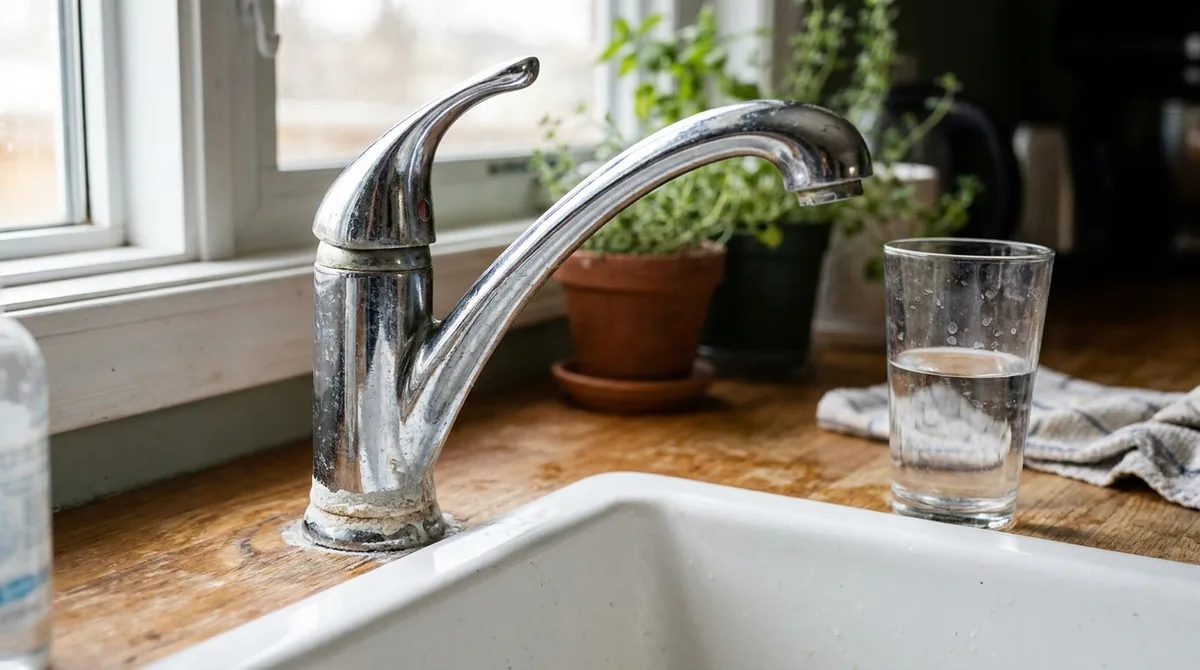
At home that looks like white crust around the base of taps, a chalky film on shower doors and cloudy glasses from the dishwasher. If you're about to replace a hot water tank, the EPA's point about water heater life is worth weighing.
Do you need a water softener in Edmonton?
At 10 grains per gallon, Edmonton's water is hard but well short of Health Canada's 500 mg/L "unacceptable" mark, and hardness is not a health concern. So this is a comfort and upkeep decision. A softener makes the most sense if:
- You are tired of scrubbing crust off taps and shower doors.
- You want to protect a newer hot water tank, dishwasher or washing machine.
- You plan to stay in the home for several years, so the cost has time to pay off.
A softener makes less sense if you rent and can't install one, or if you're selling soon and the scale doesn't bother you. If you do decide to buy, our guide on what a water softener costs in Edmonton breaks down installed prices, running costs and renting versus buying.
How to check how hard your own water is
There are three ways:
1. Read EPCOR's report. EPCOR posts the monthly summaries used in this guide on its website. Look for "Total Hardness (mg/L CaCO3)" and divide by 17.1 to get grains per gallon. 2. Use test strips. Hardware stores sell them. They give a rough number, which is enough to tell soft water from very hard water. 3. Book a free water test. We'll test your water and tell you what it means. Book a free water test.
If your home runs on a well, the numbers can be very different. Well water is often much harder than city water and can carry iron, so it needs its own check before you choose a system.
Choosing a softener for Edmonton water
All three of our softeners include installation, and we call you to book your install time:
- AquaMaster AMP5000, $1,999. For a home of 1 to 3 people.
- AquaMaster AMP5100, $2,690. For 4 to 6 people, and our pick for well water.
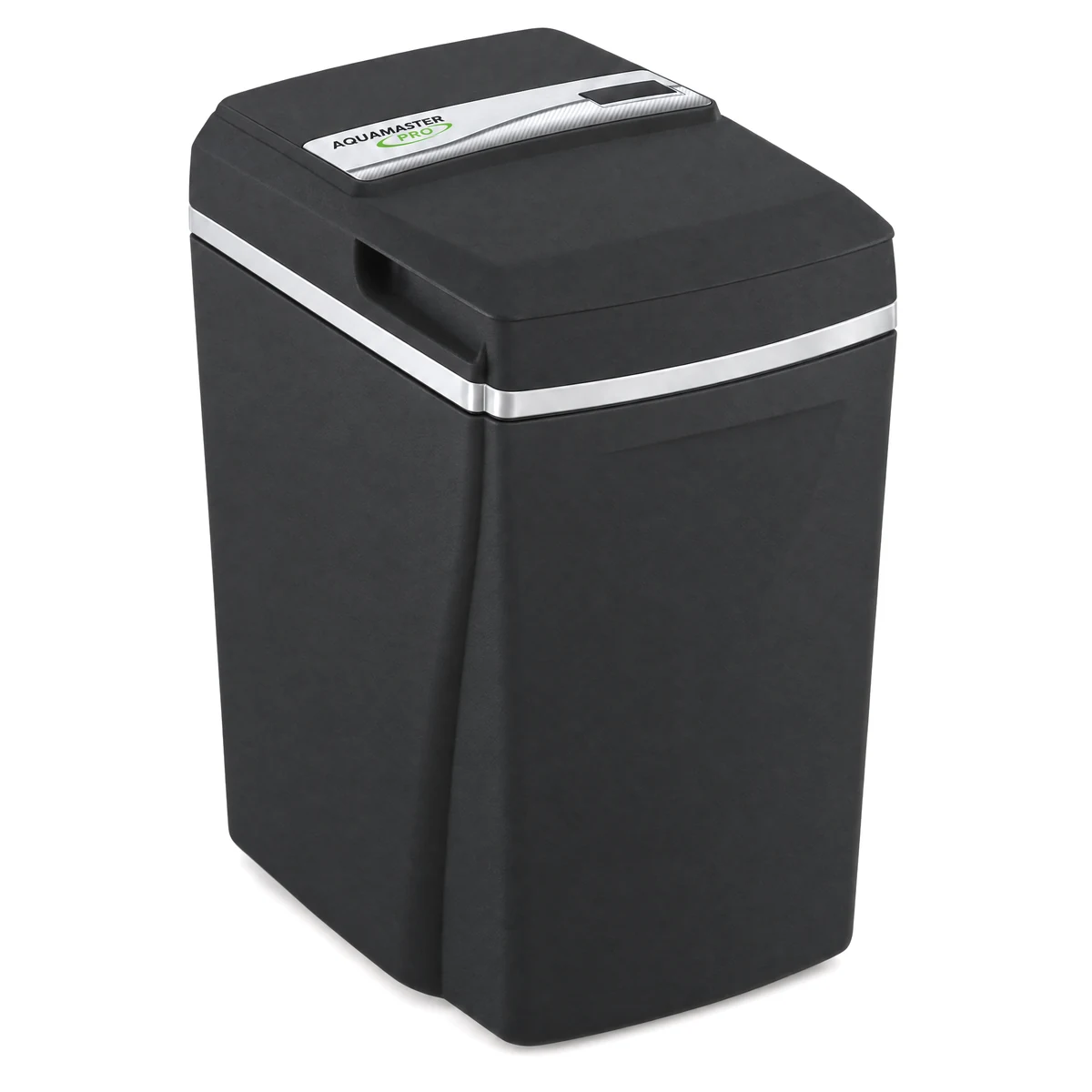
- AquaMaster Pro AMP5500, $3,299. For city water, and it also reduces the chlorine taste and smell.
Not sure which fits? Contact us and we'll help you pick.
Frequently asked questions
How hard is Edmonton's water?
About 177 mg/L on average in 2026, or roughly 10 grains per gallon, according to EPCOR's monthly water quality summaries. That is hard by the EPA's standard.
Is Edmonton's water hard or soft?
Hard. The EPA calls water above 120 mg/L (7 grains per gallon) hard, and Edmonton's average is well above that.
Is hard water bad for you?
No. Health Canada has no health-based limit for hardness. It causes scale, extra soap use and spots on dishes.
Does Edmonton's water hardness change through the year?
A little. EPCOR's 2026 monthly averages ran from 161.8 to 187.5 mg/L, with January to March harder than April to June.
Is a water softener worth it in Edmonton?
If scale on your taps, dishes and hot water tank bothers you, and you plan to stay a few years, usually yes. The EPA says softeners are often recommended above 10 grains per gallon, and Edmonton averages 10.3.
How do I test my water hardness?
Read EPCOR's monthly report, use test strips from a hardware store, or book our [free water test](/water-test/).